According to scientists, the dolphins should be treated as "non-human persons"
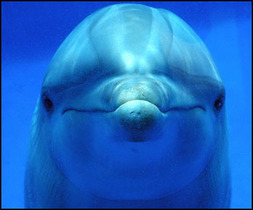
Dolphins have been declared the second most intelligent creatures the world after humans , which is why scientists are so suggestive that bright they should be treated as "non-human persons."
E studios on dolphin behavior have emphasized the great similarity between these and human beings with respect to the way we communicate. They also underscore the fact that they are more brilliant chimpanzees. These studies were supported by the anatomical research shows that the brains of dolphins have many features associated with a very high degree of intelligence.
The researchers say their work shows that is morally unacceptable to keep animals as intelligent water parks, whether to allocate kill their meat for human consumption, either by accident occurred during fishing. About 300,000 copies of whales, dolphins and porpoises die each year under these circumstances.
" Many dolphin brains are bigger than humans, and come second after the man, as far as mass is concerned, if we take into account body size," said Lori Marino said, a zoologist at Emory University in Atlanta, Georgia, who used MRI scans to map the brains of these marine animals and compared with that of primates.
" The neuroanatomy suggests that there is psychological continuity between humans and dolphins and also supposed to appear profound ethical implications on the interaction between the whale and man he added.
dolphins have long been recognized as one of the most intelligent animals. However, many researchers had placed below the chimpanzees, which, according to some studies, they can reach their own intelligence levels of children in three years. However, recently a number of behavioral studies have suggested that dolphins, particularly species such as bottlenose dolphins could be the smartest . These investigations show that dolphins have distinct personalities, a strong sense of themselves and can think in the future.
has also been shown that animals are "cultural", which means that a dolphin can be learned other new types of behaviors quickly.

Diana Reiss, a professor of psychology at the Hunter College, The City University of New York , demonstrated in a that dolphins can recognize themselves in a mirror and use it to inspect different parts of your body , an ability that was thought unique to humans and great apes.
Another study found that captive animals also have the ability to learn rudimentary language based on symbols.
Other research has shown that dolphins can solve difficult problems, while those living in freedom to cooperate in different ways that involve complex social structures and a high level of emotional sophistication.
In a recent case, while a dolphin rescued three weeks recovering in a dolphin in Australia, he was taught to swim on the tail.
After being released, scientists were amazed to find that wild dolphins have learned the exercise of the dolphin that had previously remained in captivity.
numerous similar examples, such as dolphins off the coast of Western Australia who learned to hold sponges over their snouts to protect themselves while searching for sticklebacks in the ocean floor.
These obser vations, along with others that show, for example, how dolphins could cooperate with military precision around schools of fish for food, have led to raise questions that challenge the basis of structure of your brain.
Size is only one factor. Researchers have recognized that the size of brain varies a lot, about 200 g in small cetacean species, such as the Ganges River dolphin, and over 8 kg in sperm whales, whose brains are the largest of our planet. By contrast, the human brain between 1 and about 2 kg, while that of chimpanzees weighs around 350g.
However, when it comes to intelligence, brain size becomes less important than its ratio to the body.
What Marino and his colleagues found out was that the cerebral cortex and neocortex of the bottlenose dolphins were so great that "the anatomical relationship that evaluates cognitive abilities place him in second place in relation to the human brain."
also found that the cerebral cortex of the bottlenose dolphins have the same complex folds, which are strongly linked to human intelligence.
" These folds increase the volume of the cerebral cortex and brain cells' ability to interconnect between them. "Despite having evolved into a neuroanatomical path different from humans, the brain of cetaceans has several characteristics correlated with intelligence complex," said Marino.
The next Reiss Marino and present the results from their research at a conference in San Diego, California. These data conclude that the intelligence of dolphins is evidence and, therefore, is morally repugnant mistreat .
Thomas White, a professor of ethics at Loyola Marymount University, Los Angeles, who has held several academic studies suggest that dolphins have their own rights, will also address the conference.
" scientific research [...] argues that dolphins are 'non-human persons' who deserve to be regarded morally as individuals," he said.
article http://www.animanaturalis.org/n/11457/segun_cientificos_los_delfines_deben_ser_tratados_como_personas_no_humanas
Jonathan Leake, translated by Monica Hodgekins


0 comments:
Post a Comment